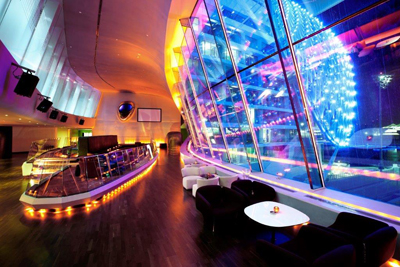
For many years we have been fascinated with the futuristic view depicted in radio plays, books, television shows and films. We called this genre science fiction and names such as H.G. Wells, Jules Verne, Isaac Asimov and more recently Arthur C. Clarke and Stanley Kubrick captured our imagination with their wonderful ideas of the future.

We also laughed at the outrageous ideas portrayed in animated cartoons set in a future where the lifestyle of the characters came from the creative genius of the animators. In many of these shows automation was a normal tool to provide a lifestyle where the environment was controlled to the optimum level that the characters required for comfort and security.
But wait, wasn’t one of these futuristic innovations an amazing travelling staircase that enabled people to travel from one floor to another without walking? We know it now as an escalator.
In the 1800’s people could only dream of flying. Then in 1903 the innovations of Orville and Wilbur Wright saw the first successful powered flight over a distance of about 37 metres.
In just 66 years from this first experimental flight, man broke the sound barrier in flight and was able to set foot on the Moon after flying a distance of more than 400,000km and returning safely to earth.
We should not be surprised when science fiction becomes science fact.
In the world of building control and automation we have seen developments that may have seemed unrealistically futuristic become commonplace in a very short space of time. Not long ago we thought the humble light dimmer gave us the amazing ability to set an ambient lighting mood. Nowadays this can be achieved automatically and is considered commonplace.
The ABB i-bus® KNX Intelligent Building Control system integrates lighting controls, comfort and environmental elements, as well as energy monitoring, all within the definition of a smart building management system. We have to remind ourselves that this system has been available for more than 30 years.
In Europe the research and development engineers and technicians are looking to the future trend where a building controls (including lighting, heating, cooling, security, comfort and household appliances), industrial control systems and city infrastructure systems can all work together for a solution that offers energy efficiency as well as the highest possible supply availability.
The idea has been cited as the KNX City where an intelligent power grid (smart grid) is working with intelligent buildings. The goal is to ensure the available grid capacity is managed in conjunction with the required building comfort levels and energy efficiency targets, to achieve a reliable and uninterrupted supply.
We have been encouraged to revise our lighting habits for some time. This has brought about the introduction of energy efficient lamps to replace the classic light bulbs in nearly all households. We have also utilised basic lighting controls for some time in an effort to conserve energy consumption. Each step that we take is a step in the right direction however we are viewing the problem like an island rather than looking to the bigger picture.
The smart grid takes care of the demands on the network via information derived from smart electricity meters and matching network capacity with demand. The traditional smart home or building tries to conserve energy and increase comfort levels through lighting controls and efficient heating and cooling appliances. The increased use of renewable energy sources such as solar and wind energy also is individually controlled with smart technology.
We are making good progress with the smart use of these individual solutions, but are we really looking at the model of an intelligent city that will see us to our future requirements.
In order to ensure a solid foundation into the future, a major factor to be considered is that of standardisation and compliance. This is where the ABB i-bus® KNX Intelligent Building Control devices can provide an appropriate solution. KNX is the world’s only international Standard for Home and Building Automation being defined in IEC 14543-3. This means that ABB i-bus® KNX products comply with the requirements of this standard. Being an international standard means that product compliance can be ensured and systems can be future proof due to the fundamental requirements of the standard which ensures compatibility and interoperability.
Technological convergence is a term entering into the language of systems. Essentially this refers to the ability for different technological systems to evolve toward performing similar tasks on a common platform. ABB i-bus® KNX already provides this level of convergence through the standardisation of a variety of building management functions.
The systems currently converging in a ABB i-bus® KNX solution are:
- Illumination
- Shutter/blind control
- Heating
- Air conditioning
- Ventilation
- Display and signalling
- Monitoring
- Security
- Load management
So now we have linked all of these electrical components and systems to provide an intelligent approach to the building management and automation. With all of these building automation systems already available through the ABB i-bus® KNX common platform we can now look to the next step.
The ABB i-bus® KNX City concept looks to the bigger picture beyond the level of individual buildings or separate energy conservation measures. As the system from one building to another is on a common platform following a recognised IEC standard, we can provide simple communication between these buildings so that the intelligent building is becoming part of an intelligent neighbourhood. Renewable energy resources for example can be shared at the neighbourhood level. An excess supply of renewable energy at one building can be communicated to neighbouring building so that the neighbours load profile can efficiently utilise the extra resource locally. This could take demand away from the limited resources of the grid.
This could also then extend to a suburb and further, to the entire city.
Working in reverse if the smart grid has an issue with demand or another situation that could compromise the supply availability, a request could be sent to the linked neighbourhood for a reduction in demand in order to ensure supply availability.
One command from the grid could ask the neighbourhood to adjust an air conditioning set point by 1 to 2 degrees across multiple buildings. Lighting levels could be dimmed by 2%. Certain loads could be delayed from coming on line until the grid capacity if better placed to cope with this. All of these minor adjustments over the neighbourhood, suburb or city can have a small and potentially unrecognisable impact on the environment for the occupants of the building, but it could have a dramatic effect on averting the risk of a grid outage.
As can be seen, utilising ABB i-bus® KNX and the concept of the KNX City, the building necessities of lighting, heating, ventilation, air conditioning, window shading, security and comfort controls can be integrated with energy measurement and demand monitoring, grid capacity requirements and total city infrastructure services management.
Energy efficiency and energy conservation without intelligent building services engineering is an island approach. To have a variety of incompatible systems in building automation applications introduces unnecessary protocol conversion and risk. To use a system that is not compliant with an international standard lacks security of product supply and future design changes.
A “smart power grid” electrical network without utilising an intelligent building is also lacking a holistic approach to the needs of an intelligent city.
ABB i-bus® KNX Intelligent Building Control with the KNX City concept provides a solution that is not only smart, but is also intelligent and clever.
Does it all sound like another episode in a futuristic science fiction or fantasy?
The building blocks exist today. By applying the model we can work towards not only an intelligent building, we can seize the opportunity to develop the true city of the future. The ABB i-bus® KNX City.
Written by: Ian Richardson, Senior Product Engineer, ABB Australia